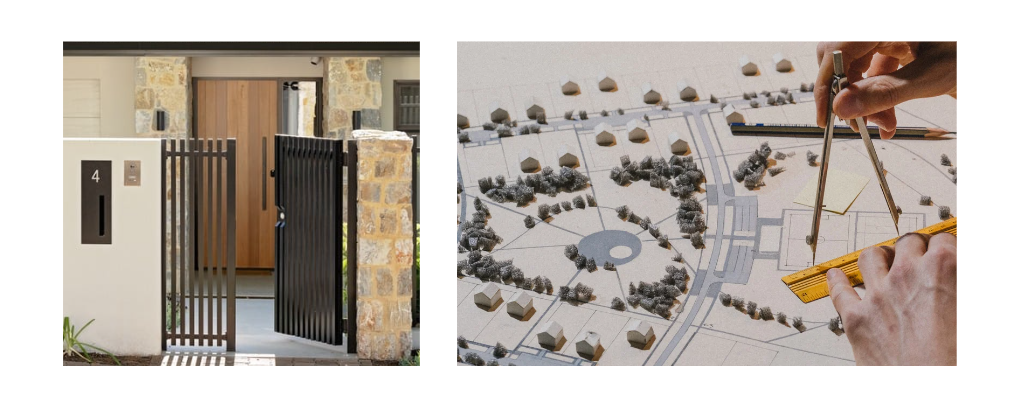
Most houses are designed for today, not tomorrow. They reflect a family’s needs today, including the number of bedrooms needed, lifestyle, and budget. That’s all good for a while.
But life doesn’t stay still.
Kids grow up and move out. Families increase or decrease. Parents can move in. Mobility demands change. Even everyday routines change in ways that are difficult to anticipate when constructed.
That’s why more homeowners ask a better long-term question when they are working with a custom home builder: Not just “what do we need now?” but “how will this home work for us in 10, 20, or even 35 years?”
That’s the mindset shift that separates standard builds from truly future-ready homes.
Flexible floorplans: designing for change, not just today
A flexible floorplan isn’t about adding complexity — it’s about allowing space for life to evolve.
From a construction standpoint, this approach could be practical. The study is currently on the ground floor, but it may become a bedroom in the future. Open or enclosed living spaces should be chosen based on lifestyle changes. A good design will not lock homeowners into a rigid layout. Rather, it maintains structural flexibility, allowing rooms to change function without major renovation.
The point isn’t to build every possibility into the design upfront—that would be wasteful and expensive. The point is to avoid choices that prevent future change. A custom home builder with experience in long-range planning knows the difference between a wall that locks in a layout forever and a structural approach that keeps options open.
When you explore custom home designs with a builder who thinks this way, the result is a home that adapts rather than one you eventually have to work around.
Universal design is about long-term comfort
Universal design is often confused with just accessibility. It is about long-term liveability for everyone, including ageing in place, with features like:
- Level access points or no-step
- Wider hallways and doorways
- Easy-to-use fixtures like lever handles
- Bathrooms designed for all stages of life
- Kitchens that support both sitting and standing use
None of these features feels clinical when done well. Instead, they improve comfort for every stage of life — from young children to ageing parents.
For many families, the process is not just about today’s needs. It’s about ensuring the home remains practical and comfortable decades later, without expensive retrofitting.
Sustainability: building homes that perform long-term
Sustainability in home building has moved far beyond optional upgrades. Key strategies include passive solar design, high-quality insulation, double glazing, and durable materials, ensuring homes perform efficiently and cost-effectively over the long term.
Key elements include:
- Passive solar design for natural heating and cooling
- High-quality insulation for energy efficiency
- Double glazing for temperature control
- Durable material selection to reduce long-term maintenance
These decisions don’t just benefit the environment — they directly impact the cost of living and comfort.
A well-designed sustainable home is easier to maintain, cheaper to run, and significantly more comfortable year-round.
For homeowners planning, this is especially important when considering long-term affordability and a simpler lifestyle.
Growing families and downsizers: different needs, same thinking
At first glance, growing families and downsizers appear to have opposite goals.
But both are actually planning for change.
Growing families need space that can expand as they grow. Downsizers need homes that simplify life without feeling restrictive.
In both cases, the same design logic applies: build flexibility into the structure from the beginning.
A thoughtful custom home builder considers both perspectives when designing:
- Zoned living areas for privacy and connection
- Efficient layouts that reduce wasted space
- Storage solutions that support long-term usability
- Single-level living options for future convenience
If you’re exploring what that might look like in practice, the team at Regent Homes can guide you through the available knockdown-rebuild options and long-term design pathways.
Why getting it right early matters
Retrofitting a home is almost always pricier and more limiting than designing correctly from the start.
Adjustments like:
- Widening doorways
- Adding structural accessibility features
- Reconfiguring layouts
- Improving energy performance after construction
…are possible, but they rarely match the efficiency of doing it right in the initial design phase.
This is why future-proofing isn’t an upgrade. It’s a design standard.
Working with an experienced builder integrates these decisions early, rather than adding them later as costly fixes.
With decades of experience building homes across South Australia, Regent Homes approaches every project with this long-term mindset — ensuring homes are built not just for today but for the decades ahead.
Build a home that evolves with your life
A home should never get old, because life is changing.
Instead, it needs to change with the people who live in it.
That’s the real value of working with a custom home builder who thinks long-term—not just designing for today, but designing for life.
To explore what’s possible, you can view Regent Homes’ home design range, visit their display homes in Adelaide, or speak directly with their team through the contact consultation process.
Because the best homes don’t just get built well — they get built to last through every stage of life.